Faceless GST Assessment: CBIC Plans Centralised CGST Administration from April 2027
CBIC will release a framework for faceless and centralised CGST administration for consultation. What is proposed and what taxpayers should do now.
CBIC is preparing a framework for faceless and centralised administration of CGST. At a PHDCCI conference on 18 November 2026, CBIC Chairman Vivek Chaturvedi said the framework will be released for public consultation “very shortly”, according to media reports. No draft text was available when this article was written, so what follows is based on the Chairman’s remarks as reported.
| Point | What has been reported |
|---|---|
| Who announced it | CBIC Chairman Vivek Chaturvedi, at a PHDCCI conference on 18 November 2026 |
| Status | Framework to be released for public consultation; the draft is not yet public |
| Taxpayers in scope | About 70 lakh CGST taxpayers, of whom about 2 lakh have registrations in more than one jurisdiction |
| Likely start | Reports point to 1 April 2027 (FY 2027-28), but no notified date exists |
| Nature | A Central administrative initiative, not a GST Council decision |
What is the proposal?
Two ideas are being combined:
- Centralised handling for large, multi-State taxpayers. A taxpayer with several GSTINs would deal with one central office for registration, scrutiny, adjudication, reviews and appeals, instead of separate officers in each State.
- Faceless handling for other taxpayers. Work would be allotted through a national platform and the taxpayer would not know, or deal in person with, the officer handling the case, as in faceless income tax assessment.
Why now?
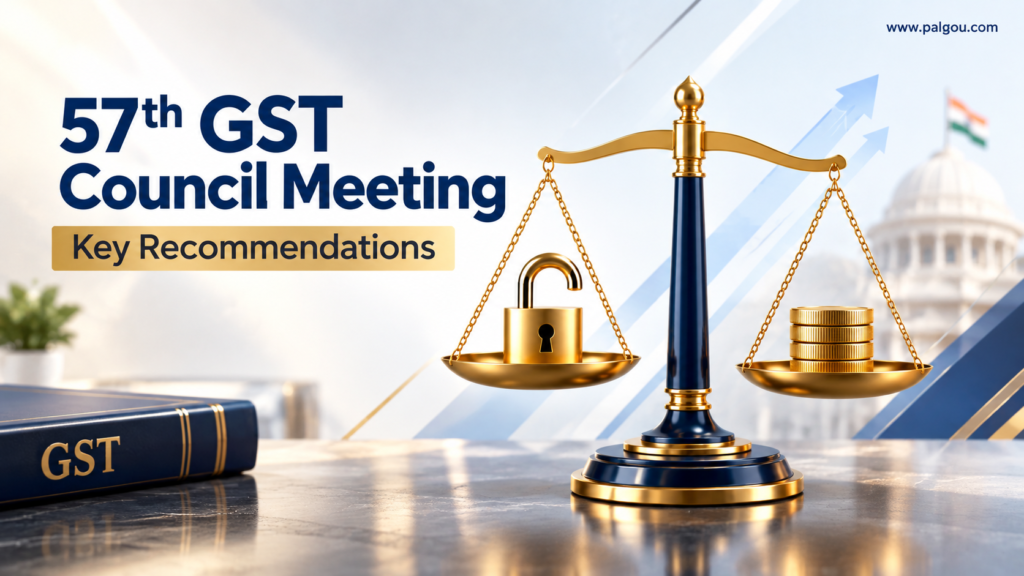
The proposal follows the 57th GST Council meeting of 8 October 2026, which discussed process reforms from 1 April 2027. Related changes reported from that meeting include removal of arrest powers of tax officers, a higher prosecution threshold of ₹5 crore, limiting transit inspection to origin and destination, and an officers’ committee to report in three months on ITC for motor vehicles and section 16(2)(c). The faceless framework is a separate Central initiative and does not need a Council decision.
What could change for you?
| If you are | Possible effect |
|---|---|
| A large business with many GSTINs | One central point for scrutiny, adjudication and appeals, so fewer parallel proceedings and inconsistent views across States |
| A mid-size or small taxpayer | Notices and orders may come from a national pool, with replies filed online and no personal hearings at a local office |
| Registered with a State administration | Most taxpayers with turnover below ₹1.5 crore are administered by States, so the Central framework may not directly cover them |
These are likely effects based on how faceless systems have worked elsewhere; the actual design will be known only when the draft is published.
What to do now
- Keep your registered e-mail and mobile number on the GST portal current, as faceless systems depend on portal communication.
- Reply to every notice on the portal within the time allowed; a missed reply is hard to fix when there is no local officer to approach.
- Reconcile GSTR-1, GSTR-3B and GSTR-2B regularly so scrutiny queries are easy to answer.
- Keep invoices, e-way bills and ITC records ready in digital form.
- When the draft is released, read it and send comments within the consultation period.
For recent GST compliance changes, see our notes on the revised GST REG-01 form and GST registration amendment (REG-14) with OTP verification.
Frequently asked questions
Is faceless GST assessment in force?
No. Only the intention to release a framework for public consultation has been announced. Nothing has been notified.
When will it start?
Reports suggest 1 April 2027, but this is not a notified date and may change.
Will it apply to State GST?
The initiative concerns CGST administration by CBIC. State administrations would need to decide separately for SGST.
Note: this article reflects media reports of the Chairman’s remarks; the draft framework itself has not been published. We will update this page when it is.
More in GST
 GST
CGST Amendment Rules 2026 Corrigendum (G.S.R. 1001(E)): Refund Revalidation, REG-17 and Rule 14B Fixes
 GST
E-Invoicing for RCM Self-Invoices: IRP Production from 15 December 2026, Mandatory from 1 January 2027
 GST
GST Circulars 265 and 266: Toys, Sublimation Paper, Used Cars, Bio-Stimulants and NBFC Co-Lending
We handle these for individuals, businesses and NRIs across India: