GST Post-Sale Discounts, Credit Notes and 90% Inverted Duty Refunds from 1 November 2026
From 1 November 2026, post-sale discounts can go through GST credit notes, inverted duty refunds get a 90% provisional payout and the ₹1,000 export refund limit is removed (Notification 03/2026-CT).
GST post-sale discount rules changed on 1 November 2026. Notification No. 03/2026-Central Tax, dated 26 October 2026, brought Sections 153 to 155 of the Finance Act, 2026 into force from that date. The changes amend Sections 15, 34 and 54 of the CGST Act, 2017. They make it easier to give a discount after a sale, allow a credit note for it, extend the 90% provisional refund to inverted duty claims, and remove the ₹1,000 minimum refund limit for exports of goods made with payment of tax.
| Finance Act 2026 | CGST Act section | What changes from 1 November 2026 |
|---|---|---|
| Section 153 | Section 15(3)(b), value of supply | A discount given after the supply is excluded from value if the supplier issues a credit note and the recipient reverses the related ITC. The need for a prior agreement and a specific invoice link is dropped |
| Section 154 | Section 34(1), credit notes | A credit note can be issued for such a post-supply discount |
| Section 155 | Section 54(6) and 54(14), refunds | 90% provisional refund extended to inverted duty structure claims. The ₹1,000 minimum refund limit is removed for goods exported with payment of tax |
Post-Sale Discount: What Changed under Section 15(3)(b)
Before this change, a discount given after the supply was left out of the taxable value only if it had been agreed before or at the time of supply and could be linked to a specific invoice. That made retrospective volume discounts and year-end rebates hard to handle.
From 1 November 2026, the discount is excluded from the value of the supply if two things happen:
- the supplier issues a credit note under Section 34, and
- the recipient reverses the input tax credit that relates to the discount.
Reports describe this as dispensing with the pre-existing agreement and the specific invoice linkage, subject to the revised statutory conditions. Read Section 15 as amended for the exact wording.
Credit Notes for Post-Supply Discounts: Section 34(1)
Section 34(1) now expressly includes a discount covered by Section 15(3)(b) as a ground for issuing a credit note. In practice, the supplier reduces its output tax through the credit note, and the buyer must reverse the corresponding credit. If the buyer does not reverse it, the value reduction should not be available. Both sides need their records aligned.
Practical example
A distributor sells goods to a retailer during the year and, in March, agrees a rebate of ₹1,00,000 (before tax) for crossing a sales target. Under the new rules, the distributor can issue a credit note for the rebate, reduce the value on which GST is payable, and the retailer reverses the ITC linked to that rebate. This is an illustration only. Check the conditions and the time limit for credit notes in Section 34 for your case.
Inverted Duty Refunds: 90% Provisional Refund under Section 54(6)
Provisional refunds were earlier limited mainly to zero-rated supplies such as exports and supplies to SEZs. Section 155 extends the provisional refund of up to 90% to eligible claims of unutilised ITC arising from an inverted duty structure under Section 54(3)(ii). The release is risk-based and subject to the prescribed conditions and safeguards.
- Who gains: businesses whose input tax rate is higher than the output rate, such as some textile, pharmaceutical, chemical and renewable energy suppliers, as reported.
- Input services: the 57th Council recommended that inverted duty refunds also cover ITC on input services, for credit availed on or after 1 November 2026.
- Timelines: commentators report different processing periods for the provisional amount. Check the refund procedure notified by CBIC and GSTN for the exact timelines.
No ₹1,000 Minimum for Export Refunds of Goods with Payment of Tax
Section 155 also amends Section 54(14) so that the ₹1,000 minimum threshold no longer stops refunds for goods exported with payment of tax. Small exporters who paid IGST on exports can now claim refunds of smaller amounts, subject to the usual requirements.
What Businesses Should Do Now
- Suppliers: update your credit note policy and sales terms to allow post-supply discounts through GST credit notes, and tell customers that they must reverse ITC.
- Buyers: set up a process to reverse ITC when you receive a credit note for a discount.
- Accounts and ERP: check that credit notes for discounts flow correctly into GSTR-1 and GSTR-3B.
- Inverted duty claimants: review your refund claims, see whether they qualify for the 90% provisional route, and keep your invoice and ITC data reconciled.
- Small exporters: look at past small-value export refund claims that were blocked by the old ₹1,000 limit.
Official Documents
- Notification No. 03/2026-Central Tax dated 26 October 2026 – appoints 1 November 2026 for Sections 153 to 155 of the Finance Act, 2026 (some commentaries mislabel it as 04/2026)
- CBIC Tax Information Portal: GST Acts and Circulars – to read Sections 15, 34 and 54 of the CGST Act as amended
Frequently Asked Questions
From when can a post-sale discount go through a GST credit note?
From 1 November 2026, when Sections 153 and 154 of the Finance Act, 2026 came into force.
Does the buyer have to do anything?
Yes. The discount is excluded from value only if the recipient reverses the input tax credit attributable to the discount.
Is the 90% provisional refund available for inverted duty claims now?
Yes, from 1 November 2026, for eligible claims under Section 54(3)(ii), subject to the conditions and safeguards.
Is there still a minimum amount for export refunds?
For goods exported with payment of tax, the ₹1,000 minimum threshold has been removed.
Related Updates
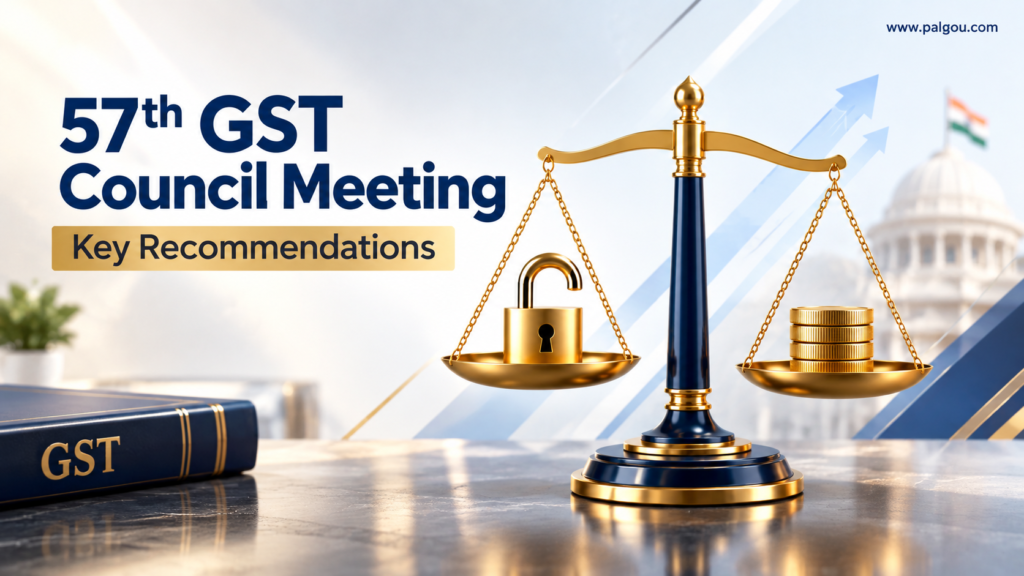
- 57th GST Council meeting recommendations
- GST changes from 1 November 2026: hotel and catering ITC, EV services and rate updates
- CGST Amendment Rules 2026: key changes and dates
- GST portal advisories of 1 November 2026: roundup
Source: Notification No. 03/2026-Central Tax dated 26 October 2026 and Sections 153 to 155 of the Finance Act, 2026, as reported by tax news sites. This article is a plain-language summary for general information. Please read the official notification and the amended sections before acting.
More in GST
We handle these for individuals, businesses and NRIs across India: